Indie Rock Recording Studio in Chicago: What It Actually Costs to Record Your Album
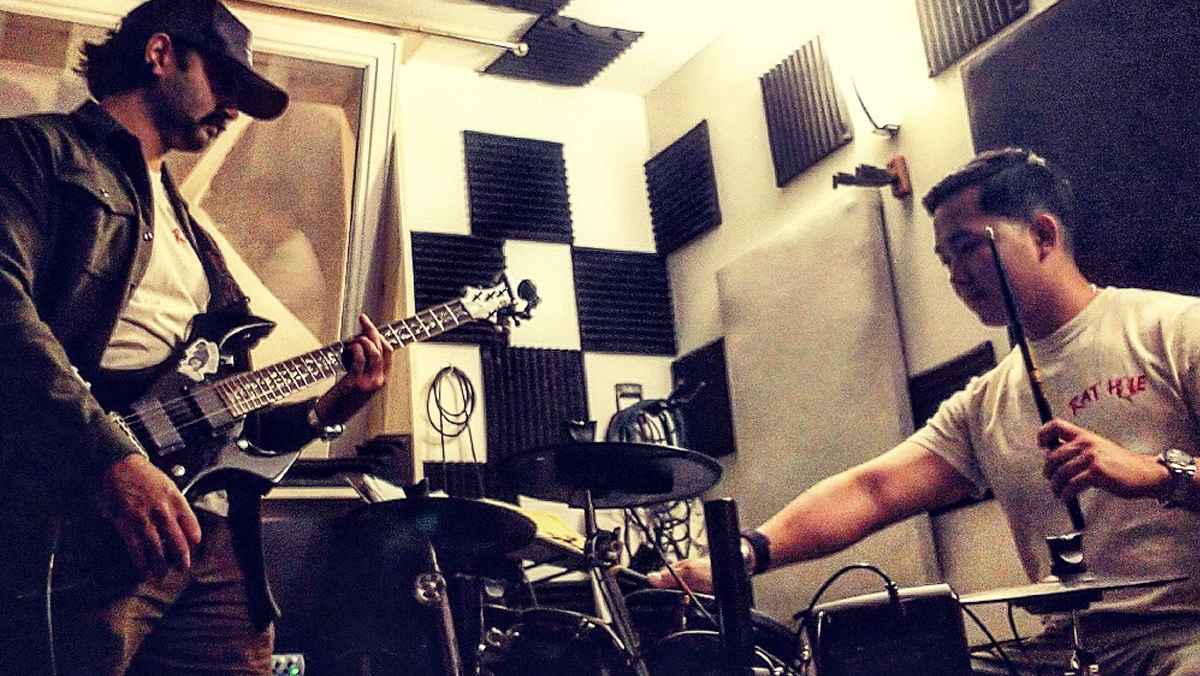
Recording an indie rock song at my Chicago recording studio typically costs $700 to $900, including mixing and mastering. Recording runs $50 an hour with a 4-hour minimum, and most songs take 8 to 12 hours, which is $400 to $600. Mixing with mastering starts at $300 per song. Indie rock gives me the widest range of sounds of any genre I record, so the session starts with a decision about what instrument is the hero of your song.
What Recording an Indie Rock EP or Album Costs in Chicago
At 8 to 12 hours of recording per song plus mixing and mastering from $300, a five-song indie rock EP typically comes to $3,500 to $4,500. A ten-song album typically comes to $7,000 to $9,000. The song calculator below lets you plug in your own song count.
What Will Your Project Cost?
A tight, rehearsed session moves toward the faster end (2 hrs per instrument or vocalist). A session still working out parts moves toward 4 hrs or more per instrument/vocalist. Recording time is always dependent on your level of preparedness.
Based on $50/hr studio time and mixing/mastering starting at $300 per song. Give the studio a call for a tighter estimate.
Call for a Free ConsultationHow I Record Electric Guitar at My Chicago Recording Studio
There are many ways to record electric guitar and amps, and I choose based on the song. What I always do is split the signal and capture a clean DI of the guitar alongside the amp. That way, if we want to use amp or pedal emulators later, we still have options. My personal favorite emulators in the studio are anything by Neural DSP.
From there the options open up. The classic approach is one or two SM57s on the amp, with or without a room mic like a Neumann U87. I’ve had great results with just a U87 by itself, or a U87 mixed with an SM57. I’ve also gotten a great result with an SM7B up front and a U87 behind it. One that surprised me is a stereo pair of Neumann KM184s off center, which has worked really well for heavy distortion.
On the chain, guitars always go through a subtractive layer of analog Neve 1073 EQ and then a very small amount of 76 compression. It might not even have any gain reduction. I use it as a tone box.
Drums and Bass Guitar
For drums, I’ve been in love with Superior Drummer. Whether we track your instruments to a click or your drummer plays an e-kit, the drum samples sound incredible and give the record a polished, full foundation.
For bass guitar, we always capture a clean DI. Beyond that, I love experimenting with mic position on bass amps to create unique tones and layers. Or we can keep it simple, whichever the song needs.
Why I Care About Indie Rock
In my previous life, indie rock and punk were my entire life. I toured the country playing 30 shows in 30 days in dive bars and underground venues. I played bass in hardcore bands, and guitar and synth programming in more left-of-center art rock. I cut my teeth as an engineer running live sound at venues for years and recording punk bands in studios from small to large. That’s one of the reasons I made the D.I.Y. Musicians Resource packet: to help these specific musicians, because I know personally how hard that life is.
Indie rock is a catchall term for a genre, but if you’re looking for a raw, organic sound or a larger, more epic one, this is where my passion for engineering music lies, because I understand both.
Hear It for Yourself
Here’s an audio reel of about 25 different artists recorded at my Chicago recording studio, with genres ranging from indie rock to folk, noise, and experimental
What to Bring to a First Conversation
Call me with the guitars, amps, and pedals you play, and tell me whether you want to record through your own amp or keep the option of amp emulation open. Tell me whether you’re adding bass, keys, synths, or drums, and whether your drummer plays an e-kit or you’d like to track to a click and program drums later. Let me know how many songs you have and whether you’re aiming for an EP or a full album. Those answers let me quote the project accurately and plan the sessions.
Getting Started
Untold Stories Recordings is Chicago’s #1-rated and most-reviewed recording studio, with a 5.0 rating across 196+ reviews. Call the studio at 872-444-6316 to talk through your project.