Spruce and Mahogany vs Spruce and Rosewood: How Acoustic Guitar Tonewood Combinations Shape Your Recording
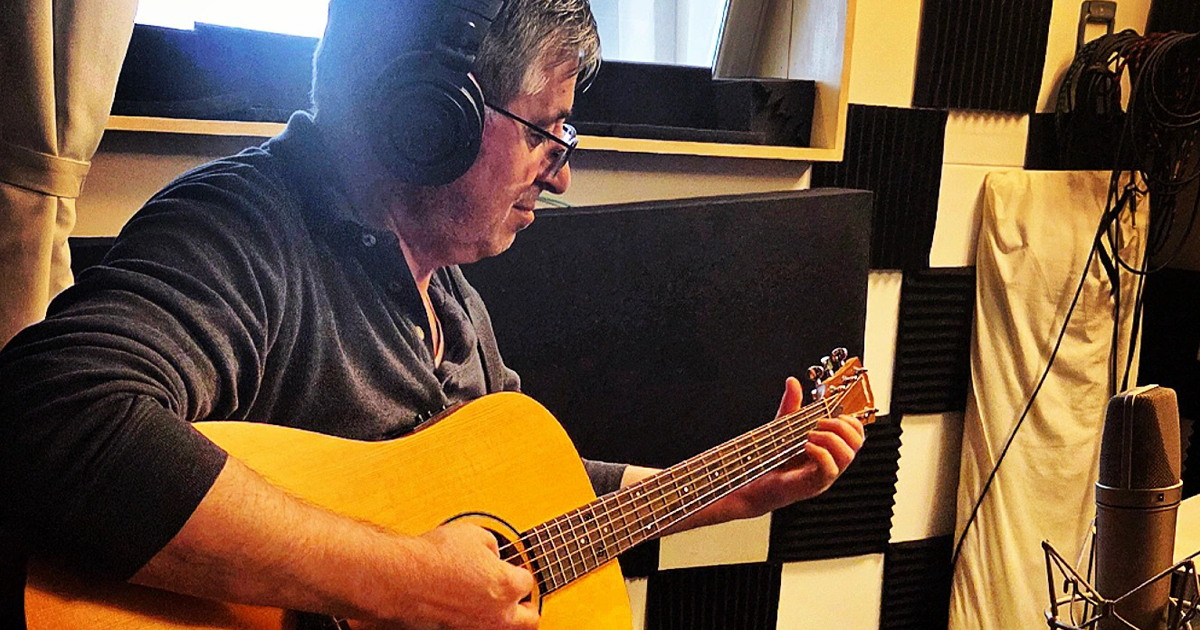
When I record an acoustic guitar at my Chicago recording studio, the combination of top and back woods tells me more than either one alone. The top drives the high end, the back and sides drive the low end, and the pairing decides how the whole guitar sits in a song. Before I opened this studio, I spent years working for an acoustic guitar manufacturer, and once I know the combination, I already know roughly how much work the mix is going to take before I’ve recorded a single note.
This is part 3, the last in a three-part series on acoustic guitar tonewoods. Part 1 covered back and side woods, and part 2 covered top woods.
Spruce and Mahogany: The Workhorse
Spruce and mahogany is the workhorse combination. You get high end from the spruce top and a midtone body underneath from the mahogany. It’s balanced, it’s versatile, and it doesn’t demand much special treatment to record well.
All Mahogany: The Vintage Sound
Then there’s full mahogany, with the top, back, and sides all the same wood. There’s no spruce or cedar brightening up the top, so the guitar is entirely midtone. It’s warmer, more compressed, and more vintage sounding overall.
Spruce and Rosewood: The Full Spectrum
Spruce and rosewood gives you the full spectrum, with bright highs and big bass. It sounds huge, but it also takes more care in the mix to keep that low end from taking over.
Spruce and Maple: Clarity and Separation
Spruce and maple is about clarity and separation. It’s bright on both ends with less coloration, so if you need the guitar to sit cleanly without competing with other instruments, this is the pairing.
Cedar and Rosewood: Warm and Intimate
Cedar paired with rosewood is the warm, intimate combination. It’s great for a solo performance or a vocals-and-guitar track, where it’s less about separation and more about the tone filling the room.
Tonewood Combinations at a Glance
- Spruce and mahogany: balanced and versatile, easy to record well
- All mahogany: entirely midtone, warmer, more compressed, vintage sounding
- Spruce and rosewood: bright highs and big bass, needs care in the mix to control the low end
- Spruce and maple: bright on both ends, clear and separated, sits cleanly with other instruments
- Cedar and rosewood: warm and intimate, best for solo or vocals-and-guitar tracks
Which Combination Fits Your Song
If the guitar has to share space with a full band, spruce and maple keeps it clear and out of the way of everything else. If it’s just you and a guitar, cedar and rosewood fills the room. If you want a guitar that handles almost anything without fuss, spruce and mahogany is the safe bet. And if you want the biggest sound possible, spruce and rosewood delivers it, as long as the low end gets managed in the mix.
How the Combination Changes My Recording Setup in Chicago
My acoustic chain is a stereo pair of Neumann KM184 small-diaphragm condensers, each feeding its own Neve 1073 channel, into two Warm Audio WA76 compressors linked in stereo. The chain stays the same, but the combination in front of it changes how I use it. A spruce and rosewood guitar needs its low end watched from the first take. A spruce and mahogany guitar asks for very little. The 1073’s four EQ bands let me make those calls at the source, before anything hits the DAW.
What Your Acoustic Recording Will Cost in Chicago
Studio time is $50 an hour with a 4-hour minimum, and most acoustic-driven songs take 4 to 8 hours to record. Mixing and mastering starts at $300 per song, which puts a finished acoustic song at $500 to $700 in most cases. Use the calculator below to price a single, an EP, or a full album.
What Will Your Project Cost?
A tight, rehearsed session moves toward the faster end (2 hrs per instrument or vocalist). A session still working out parts moves toward 4 hrs or more per instrument/vocalist. Recording time is always dependent on your level of preparedness.
Based on $50/hr studio time and mixing/mastering starting at $300 per song. Give the studio a call for a tighter estimate.
Call for a Free ConsultationWhat to Tell Me About Your Guitar
When you call, give me the make and model of your guitar along with its top wood and its back and side wood. Tell me whether the song is a solo performance or part of a full band arrangement, since that changes how the combination needs to sit. If you own more than one guitar, tell me about each, and we can decide together which one fits the song best.
Getting Started
That wraps up the tonewoods series. If you missed them, start with part 1 on back and side woods and part 2 on top woods.
Untold Stories Recordings is Chicago’s #1-rated and most-reviewed recording studio, with a 5.0 rating across 197+ reviews. Call the studio at 872-444-6316 to talk about your guitar and which one fits your songs.