Spruce vs Cedar: How Acoustic Guitar Top Woods Shape Your Recording
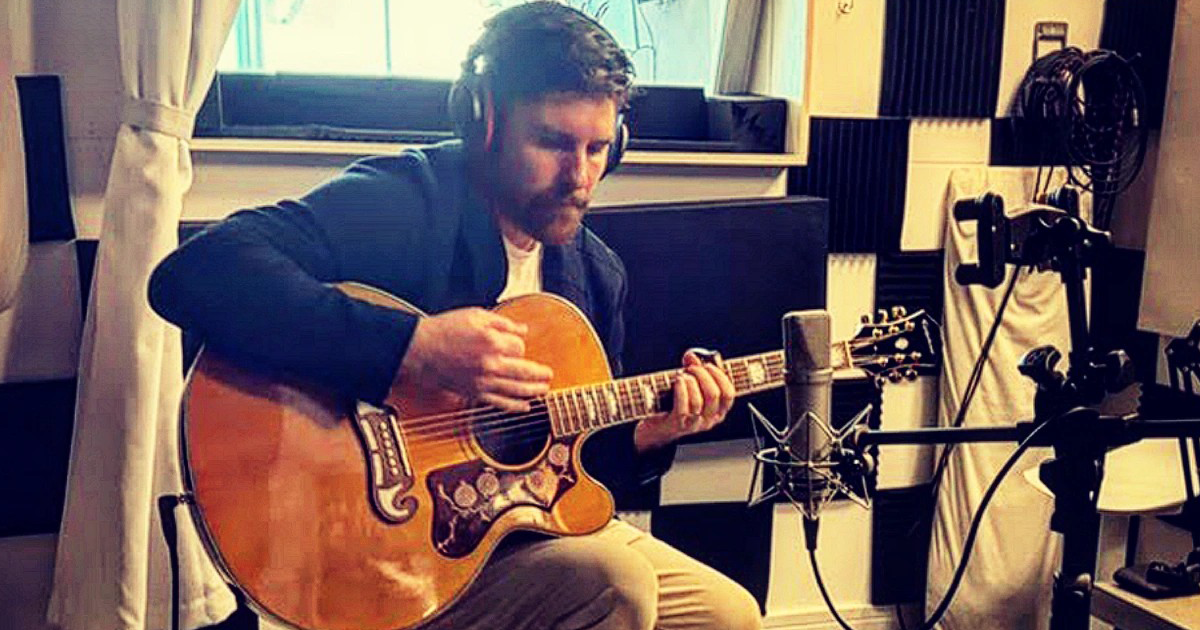
When I record an acoustic guitar at my Chicago recording studio, the top wood tells me what the high end is going to do, because the top does most of the work up there. Spruce means high end. Cedar means warmth. Before I opened this studio, I spent years working for an acoustic guitar manufacturer, and that background shapes how I mic your guitar before we record a note.
This is part 2 of a three-part series on acoustic guitar tonewoods. Part 1 covered back and side woods, and part 3 covers how tops and backs work together.
Spruce: The High-End Wood
Always think high end when you see spruce. But if you’re buying a spruce top, how it ages matters just as much as the wood itself. The three spruces you’ll see most often each start in a different place and change differently over the years.
Adirondack Spruce: Gets Better With Age
Adirondack starts out very stiff. Over time it warms up but keeps its projection, so it actually gets better with age.
Engelmann Spruce: Warm From Day One
Engelmann is much warmer and softer right out of the case. It won’t have the same projection as Adirondack, but it’s better suited to fingerpicking from day one.
Sitka Spruce: The Working Man’s Spruce
Sitka is the working man’s spruce. It’s excellent wood, it takes longer to break in, and it’s the most balanced of the three.
Cedar: The Warm Wood
I love cedar. It’s your midtone wood, so always think warmth when you see a cedar top. It has a softer attack, it’s great for fingerstyle, and it’s great for a track that’s just vocals and guitar.
Top Woods at a Glance
- Adirondack spruce: high end, starts stiff, warms up with age and keeps its projection
- Engelmann spruce: high end, warm and soft from day one, less projection, suited to fingerpicking
- Sitka spruce: high end, most balanced of the three, takes longer to break in
- Cedar: warmth and midtones, softer attack, suited to fingerstyle and vocal-and-guitar tracks
How I Mic Spruce and Cedar Tops at My Chicago Recording Studio
For acoustic guitar I use a stereo pair of Neumann KM184 small-diaphragm condensers, each running into its own Neve 1073 channel and then into two stereo-linked Warm Audio WA76 compressors. The top wood decides how I use that chain. Mic a cedar top the same way you’d mic spruce and it gets muddy fast, so a cedar guitar doesn’t get the same setup a spruce guitar does. The four bands of EQ on the 1073 let me handle that at the source instead of cleaning it up later in the DAW.
What a Recorded Acoustic Song Costs in Chicago
Recording runs $50 an hour with a 4-hour minimum, and most acoustic-driven songs take 4 to 8 hours to track. With mixing and mastering starting at $300 per song, a finished acoustic song typically comes to $500 to $700. Plug your song count into the calculator below to price a single, an EP, or a full album.
What Will Your Project Cost?
A tight, rehearsed session moves toward the faster end (2 hrs per instrument or vocalist). A session still working out parts moves toward 4 hrs or more per instrument/vocalist. Recording time is always dependent on your level of preparedness.
Based on $50/hr studio time and mixing/mastering starting at $300 per song. Give the studio a call for a tighter estimate.
Call for a Free ConsultationWhat to Tell Me About Your Guitar’s Top
When you call, tell me the make and model of your guitar and whether the top is spruce or cedar. If it’s spruce and you know which kind, Adirondack, Engelmann, or Sitka, tell me that too, along with roughly how old the guitar is, since spruce tops change as they break in. Let me know whether you mostly fingerpick or strum. That’s enough for me to start planning the session before you walk in.
Getting Started
Next in this series: how top and back woods work together, from spruce and mahogany to cedar and rosewood.
Untold Stories Recordings is Chicago’s #1-rated and most-reviewed recording studio, with a 5.0 rating across 197+ reviews. Call the studio at 872-444-6316 to talk about your guitar before you book.